
Unexpected expenses can appear at any time. Medical bills, travel needs, visa processing costs, tuition deposits, relocation expenses, or urgent family matters can quickly create financial pressure. In situations like these, waiting weeks for funds is often not practical.
A personal loan offers one of the fastest ways to access money when you need it. Unlike long-term financing such as mortgages or complex business loans, personal loans are designed to provide quick financial support with a straightforward application process.
Many people use personal loans to cover important life steps such as paying for study permits, handling relocation costs, funding job opportunities abroad, or bridging financial gaps before starting a new role. When handled responsibly, a personal loan can serve as a useful financial tool rather than a long-term burden.
Understanding how the process works, what lenders expect, and how to position your application correctly can significantly increase the chances of approval and reduce delays.
What a Personal Loan Is and How It Works
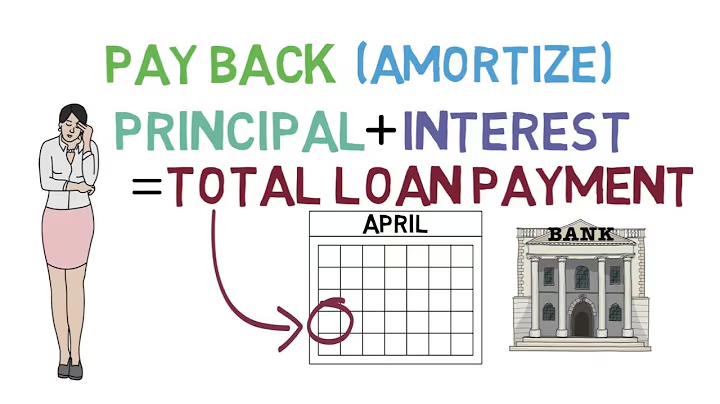
A personal loan is an unsecured or secured loan provided by banks, credit unions, or online lenders. It allows an individual to borrow a fixed amount of money and repay it over a defined period through monthly installments.
Unlike loans tied to specific assets, many personal loans do not require collateral. Approval is typically based on income level, credit history, financial stability, and ability to repay.
Loan amounts usually range from small emergency funds to larger sums capable of covering relocation expenses, tuition deposits, visa processing fees, or professional certification costs.
Repayment periods commonly range from 6 months to 5 years, depending on the lender and the size of the loan.
Interest rates vary based on several factors including income stability, credit score, and overall financial profile.
Situations Where Personal Loans Are Commonly Used
Personal loans are often used for important life transitions and financial opportunities.
One common use is funding relocation. Individuals preparing for international travel for work permits, study permits, or job opportunities sometimes need quick access to funds for flight tickets, visa fees, insurance coverage, or accommodation deposits.
Another frequent situation involves education. Tuition deposits, examination registration, and student relocation expenses can require upfront payments that personal savings may not fully cover.
Medical expenses are another major reason. Health emergencies or insurance gaps can create immediate financial needs where fast access to funds becomes critical.
Career advancement can also require financial support. Professional training programs, certification exams, or relocation for higher paying jobs sometimes require initial financial investment.
Eligibility Requirements
Approval for a personal loan generally depends on several key financial indicators.
The most important factor is income stability. Lenders need assurance that the borrower has a reliable source of income that can support loan repayment. This could come from employment, self-employment, remote work, or consistent contract income.
Credit history also plays a major role. A positive credit record demonstrates responsible financial behavior and increases the likelihood of fast approval. Borrowers with limited credit history may still qualify but might receive smaller loan amounts or higher interest rates.
Age requirements typically require applicants to be at least 18 years old, though some lenders set the minimum age at 21.
Residency status may also be considered. Some lenders require proof of legal residence or valid identification before approving loans.
Debt-to-income ratio is another factor. Lenders evaluate how much of your monthly income is already committed to existing financial obligations.
Income and Repayment Expectations
Most lenders want to see a consistent income level that comfortably supports loan repayment.
Monthly income expectations vary by lender and country, but generally the loan repayment should not exceed 30 to 40 percent of monthly income.
For example, if a borrower earns the equivalent of $1,500 per month, lenders may consider a monthly repayment between $200 and $400 reasonable depending on existing financial commitments.
Interest rates depend on the borrower’s credit profile and financial stability. Individuals with strong credit histories typically receive lower rates, while borrowers with limited financial records may face slightly higher rates.
Repayment schedules are usually fixed, meaning the borrower pays the same amount each month until the loan is fully repaid.
Insurance Requirements
Some lenders require borrowers to maintain basic insurance coverage during the loan period.
Loan protection insurance is sometimes offered to cover repayments in cases of unexpected situations such as job loss, disability, or health emergencies.
For individuals planning relocation, lenders may also request proof of travel insurance or health insurance when the loan is connected to international travel or study permits.
Health insurance is particularly important when relocation or work permit applications are involved, since many countries require proof of medical coverage before granting entry.
Maintaining appropriate insurance coverage protects both the borrower and the lender in case of unexpected financial disruptions.
Cost Breakdown
Understanding the full cost of a personal loan is essential before applying.
The primary cost is interest. This is the fee charged by the lender for borrowing money. Interest rates vary widely depending on the borrower’s financial profile and the lender’s policies.
Application fees may also apply. Some lenders charge a processing fee when reviewing and approving loan applications.
Late payment penalties are another possible cost. Missing repayment deadlines can lead to additional charges and damage credit history.
For individuals using loans for relocation or education, additional costs may include visa processing fees, travel expenses, accommodation deposits, and insurance coverage.
Being aware of the total cost helps borrowers avoid financial strain during the repayment period.
Step-by-Step Application Process
The process of obtaining a personal loan is usually straightforward when the necessary documents and financial information are prepared in advance.
The first step involves evaluating how much money is actually required. Borrowing only what is necessary helps keep repayment manageable.
The next step is comparing lenders. Banks, online lending platforms, and credit unions often offer different interest rates, repayment terms, and approval timelines.
Once a suitable lender is selected, the borrower completes the loan application form. This includes personal information, employment details, income records, and requested loan amount.
After submission, the lender reviews the application and verifies the provided information. This stage may involve reviewing credit reports, bank statements, and employment records.
If the application meets the lender’s requirements, the loan is approved and funds are transferred to the borrower’s account. In many cases, this process can take anywhere from a few hours to several days depending on the lender.
Documents Required
Preparing documentation in advance can significantly speed up the approval process.
Commonly required documents include a valid identification document such as a passport or national ID.
Proof of income is also essential. This may include salary slips, employment contracts, tax records, or business income statements.
Bank statements are often requested to confirm income flow and financial stability.
Proof of address may also be required, especially for applicants applying through formal banking institutions.
In some cases, lenders may ask for additional documents related to relocation plans, study permits, or employment contracts abroad if the loan is being used for those purposes.
Common Mistakes to Avoid
Several common mistakes can delay approval or lead to rejection.
One frequent mistake is applying for multiple loans simultaneously. This can negatively impact credit evaluations and create the impression of financial instability.
Another issue involves requesting unrealistic loan amounts relative to income. Borrowers should request amounts that clearly align with their repayment ability.
Incomplete documentation can also slow down the process. Missing bank statements or inconsistent income records often lead to delays.
Ignoring loan terms is another major problem. Some borrowers focus only on receiving the funds quickly without reviewing interest rates, repayment schedules, or additional fees.
Carefully reviewing loan agreements before signing prevents future financial complications.
Legal Considerations
Borrowers should always work with licensed financial institutions or recognized lenders.
Unregulated lending platforms may offer fast approval but often operate outside financial regulations. This can lead to unfair interest rates or unclear repayment conditions.
Loan agreements are legally binding contracts. Once signed, the borrower is responsible for meeting repayment obligations according to the agreed schedule.
Failure to repay loans can lead to credit damage, legal recovery processes, or financial penalties.
Understanding the legal framework surrounding borrowing helps protect long-term financial stability.
Practical Tips for Faster Approval
Several practical steps can increase the chances of fast loan approval.
Maintaining a consistent income record is one of the strongest factors lenders evaluate.
Keeping bank statements organized and up to date also helps accelerate the verification process.
Applying with accurate information is critical. Any mismatch between application details and supporting documents can trigger delays.
Borrowers should also monitor their credit profiles and resolve any outstanding financial issues before applying.
Choosing lenders that specialize in quick personal loans or digital loan processing systems can significantly shorten approval timelines.
Long-Term Benefits of Responsible Borrowing
When used strategically, a personal loan can support major life transitions.
Funding relocation for international employment can open access to higher salary opportunities and long-term career growth.
Education-related borrowing can support professional advancement and access to better job markets.
Establishing a positive loan repayment record also strengthens credit history, making future financial approvals easier.
Over time, responsible borrowing builds financial credibility, which can help with larger financial goals such as home ownership, business investment, or international relocation.
Conclusion
Access to fast financial support can make a significant difference when important opportunities or urgent responsibilities arise. Personal loans provide a practical option for individuals who need immediate funds without complex application procedures.
The key to success lies in understanding the lending process, preparing proper documentation, borrowing responsibly, and maintaining consistent repayment habits. A well-managed personal loan not only solves immediate financial needs but can also support long-term plans such as career advancement, education, or relocation opportunities.
Careful planning, informed decision making, and financial discipline ensure that a personal loan remains a helpful financial tool rather than a burden.