
Access to credit can be one of the most powerful financial tools available. Loans help people start businesses, pay for education, relocate to new countries, invest in property, or handle major life expenses. Yet many borrowers enter loan agreements without fully understanding how interest rates and loan terms actually work. That lack of clarity often leads to unexpected repayment burdens, higher costs, and financial stress.
Understanding how lenders structure loans is essential before signing any agreement. Interest rates, repayment periods, and loan conditions directly determine how much a borrower will repay over time. When these elements are clear, borrowers can make confident financial decisions that support long term goals such as career development, relocation plans, education opportunities, or building stable income streams.
Loans are not simply about borrowing money. They represent financial agreements that affect income planning, legal obligations, and future financial stability.
Why Loan Interest Rates Matter
Interest is the cost of borrowing money. When a bank, credit institution, or financial service provider gives a loan, they charge interest as payment for the risk and service they provide.
Even small differences in interest rates can significantly affect the total repayment amount. For example, a loan with a slightly higher rate can increase the total cost by thousands over several years.
Interest rates typically fall into two main categories.
Fixed Interest Rates
A fixed interest rate remains the same throughout the entire loan period. Monthly repayments remain predictable, which helps borrowers plan their budgets more easily.
This type of loan is common for mortgages, education loans, and long term financing. It provides financial stability because interest payments do not change even if market rates increase.
However, fixed rate loans sometimes begin with slightly higher rates compared to variable loans.
Variable Interest Rates
Variable interest rates change based on market conditions. When interest rates rise, monthly payments increase. When rates fall, payments may decrease.
This type of loan can sometimes start with lower rates, but it introduces uncertainty for long term planning.
Borrowers considering relocation, work permit applications, or education abroad often prefer predictable repayment structures because financial stability is important during major life transitions.
Key Loan Terms Every Borrower Should Understand
Interest rates are only one part of a loan agreement. Several other terms determine how manageable a loan will be.
Loan Term
The loan term refers to the total length of time given to repay the loan.
Short term loans often range from one to five years, while long term loans such as mortgages may extend to twenty or thirty years.
Longer loan terms usually reduce monthly payments but increase the total interest paid over time. Shorter terms lead to higher monthly payments but lower total interest costs.
Principal Amount
The principal is the original amount borrowed before interest is added.
For example, if a borrower takes a loan of $20,000, that amount represents the principal. Interest is calculated based on the remaining balance.
Repayment Schedule
Loans typically require monthly payments, although some agreements may allow quarterly or customized repayment schedules.
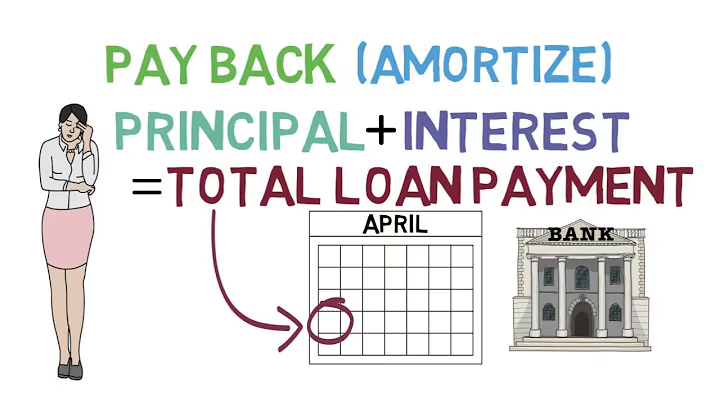
Each payment usually includes two parts:
The principal repayment
The interest payment
During the early years of many loans, a larger portion of each payment goes toward interest rather than the principal.
Annual Percentage Rate (APR)
APR reflects the total yearly cost of borrowing. It includes interest plus additional fees associated with the loan.
Many borrowers focus only on the interest rate but ignore the APR. The APR often provides a more accurate picture of the true borrowing cost.
When Loans Become Financial Opportunities
Loans can support major life decisions when used responsibly. Many people use loans for investments that improve long term earning potential.
Examples include:
Education and international study programs
Professional certifications and training
Business startups
Relocation costs for employment abroad
Property investment
For individuals pursuing work permits or study permits in other countries, access to credit can support relocation expenses, tuition payments, housing deposits, and travel costs.
In these situations, understanding loan conditions helps borrowers avoid financial pressure while establishing themselves in new environments.
Eligibility Requirements for Most Loans
Loan approval depends on several financial and personal factors. Lenders evaluate whether the borrower has the ability to repay the loan responsibly.
Common eligibility requirements include:
Proof of stable income
Employment verification
Credit history or credit score
Valid identification documents
Bank statements showing financial activity
Individuals applying for loans related to relocation, education abroad, or visa sponsorship opportunities may also need to demonstrate how the borrowed funds will be used.
A strong financial profile improves the chances of receiving favorable loan terms.
Income Expectations and Loan Affordability
Responsible borrowing requires matching loan repayments with income capacity.
Financial advisors generally recommend that loan repayments should not exceed a manageable percentage of monthly income. This ensures that borrowers can cover housing, transportation, insurance, and living expenses comfortably.
Income expectations vary depending on the purpose of the loan. For example:
Professionals relocating for international employment may earn salaries ranging from $35,000 to $80,000 annually depending on industry and experience.
Skilled workers under visa sponsorship programs may earn between $2,500 and $6,000 per month depending on the destination country and occupation.
Students completing international degrees may significantly increase their earning potential after graduation, making education loans a long term investment rather than a financial burden.
Careful planning ensures loan repayments align with realistic income expectations.
Insurance Requirements for Certain Loans
Some lenders require insurance as part of the loan agreement. Insurance protects both the borrower and the lender in case unexpected events occur.
Common insurance requirements include:
Health insurance coverage
Life insurance for long term loans
Travel insurance for relocation related loans
Property insurance for mortgage loans
For individuals planning international relocation, maintaining health or travel insurance is often necessary not only for loan approval but also for visa and residency requirements.
Insurance ensures that loan obligations remain manageable even during unforeseen circumstances.
Typical Cost Breakdown for Major Loans
Before taking a loan, borrowers should consider the full financial commitment involved. Beyond interest payments, several other costs may apply.
Application fees may range from $50 to $300 depending on the lender.
Loan processing fees may represent one to three percent of the loan amount.
Legal documentation or administrative charges may apply for certain loans.
Relocation related loans may also include costs such as visa application fees, travel expenses, accommodation deposits, and settlement funds.
Education loans may involve tuition payments, student insurance, books, accommodation, and living costs.
Careful budgeting ensures that borrowers understand the complete financial picture before accepting loan terms.
Step by Step Loan Application Process
The loan approval process generally follows a structured pathway.
The first step involves assessing financial needs and determining how much money is required. Borrowing more than necessary increases repayment obligations.
Next comes researching lenders and comparing loan offers. Interest rates, loan terms, and fees can vary widely between institutions.
Applicants then prepare financial documents, including proof of income and identification records.
After submitting the application, the lender reviews credit history, employment details, and repayment capacity.
Once approved, the borrower receives a loan agreement outlining the interest rate, repayment schedule, and legal conditions.
Carefully reviewing the agreement before signing is essential.
After acceptance, the loan amount is disbursed to the borrower or directly to the service provider, such as a university or relocation agency.
Documents Commonly Required for Loan Approval
Financial institutions usually request several documents during the loan application process.
Identification documents such as passports or national ID cards confirm the applicant’s identity.
Proof of income may include salary slips, employment contracts, or tax records.
Bank statements help lenders understand financial stability and spending patterns.
Credit history reports allow lenders to evaluate past repayment behavior.
For education or relocation related loans, admission letters, employment offers, or visa documentation may also be required.
Having these documents prepared in advance speeds up the approval process.
Common Borrowing Mistakes to Avoid
Many financial challenges arise from simple but costly mistakes.
One of the most common errors is focusing only on monthly payment size rather than total repayment cost. Lower monthly payments often extend the loan term and increase interest expenses.
Another mistake involves ignoring additional fees hidden within loan agreements.
Some borrowers also take loans without fully understanding variable interest rates, which can increase unexpectedly.
Failing to read the full loan agreement is another major risk. Legal obligations outlined in loan contracts must always be reviewed carefully.
Borrowing without a clear repayment strategy can also lead to financial stress.
Responsible borrowing requires careful planning.
Legal Considerations When Taking a Loan
Loan agreements are legally binding contracts. Once signed, borrowers are obligated to follow the repayment conditions outlined by the lender.
Failure to repay loans may result in penalties, legal action, or damage to credit history. A poor credit profile can make it difficult to secure future loans, housing agreements, or even certain employment opportunities in some countries.
Understanding the legal terms of a loan protects borrowers from unexpected consequences.
Individuals planning international relocation should also ensure that loans comply with financial regulations in their home country and destination country.
Practical Tips for Managing Loan Repayments
Successful loan management depends on disciplined financial planning.
Creating a monthly repayment budget ensures that payments are made on time. Late payments can increase interest costs and damage credit scores.
Setting up automatic payment systems can help prevent missed deadlines.
Whenever possible, making additional payments toward the principal can reduce the total interest paid over the life of the loan.
Maintaining an emergency savings fund also helps borrowers stay on track even during unexpected financial challenges.
Long Term Benefits of Responsible Borrowing
When managed properly, loans can support long term financial growth.
Education loans may lead to higher income opportunities and professional advancement.
Business loans can create new revenue streams and employment opportunities.
Relocation related loans may support international careers, higher salaries, and long term residency opportunities in more stable economies.
Building a strong repayment history also improves credit scores, making it easier to access larger financial opportunities in the future.
Responsible borrowing builds financial credibility that opens doors for property ownership, investment opportunities, and long term economic stability.
Conclusion
Loan interest rates and repayment terms shape the true cost of borrowing. Understanding how these financial structures work allows borrowers to make informed decisions that align with their long term goals.
Loans should never be approached casually. Each agreement represents a financial commitment that can influence income planning, relocation decisions, education opportunities, and career growth.
Careful evaluation of interest rates, repayment periods, insurance requirements, and total borrowing costs helps borrowers avoid unnecessary financial pressure.
With the right knowledge and planning, loans can serve as tools for opportunity rather than sources of stress. When used responsibly, they can support education, career advancement, international mobility, and long term financial security.